Around and about in Iceland


During the summer of 2003 (at mid-summer in fact) we visited Iceland, driving some three quarters of the way clockwise around Road No.1 from Akureyri to Reykjavik. Some notes on our trip can be read below. Place names have, where necessary, been anglicised.

Click on a picture to see it full-sized using the 'back' button to return to this page.


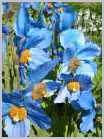
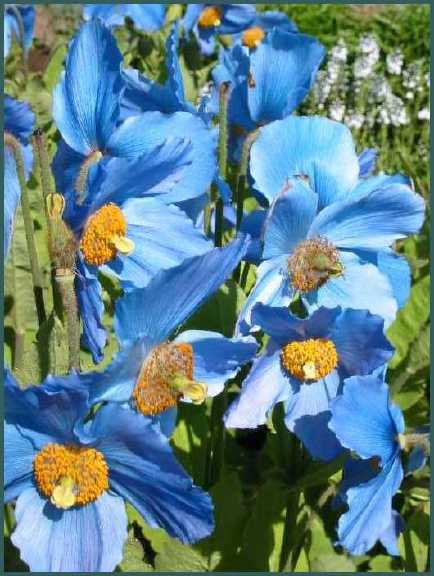
Himalayan meconopsis
in the Akureyri
Botanical Gardens
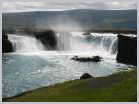
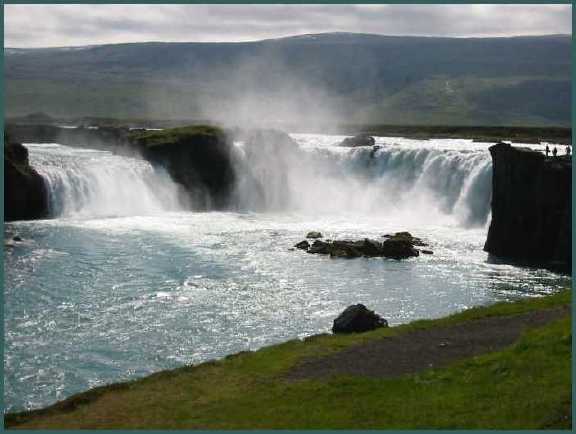
The spectactular
Godafoss
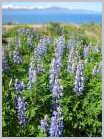
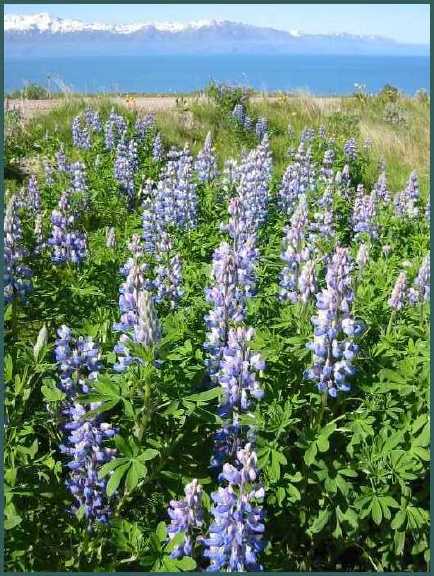
Roadside lupins
near Husavik
 
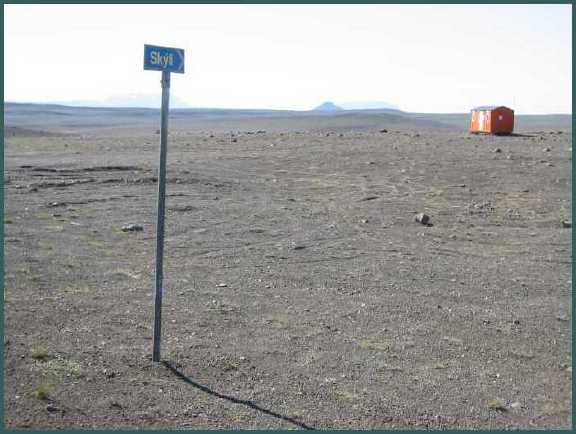
Emergency shelter on
the way to Husavik
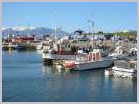
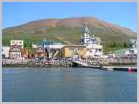
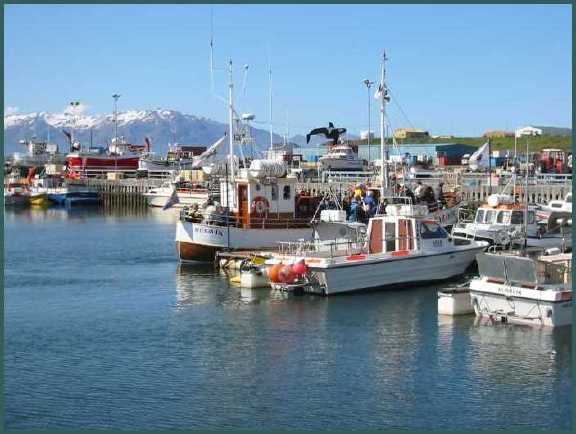
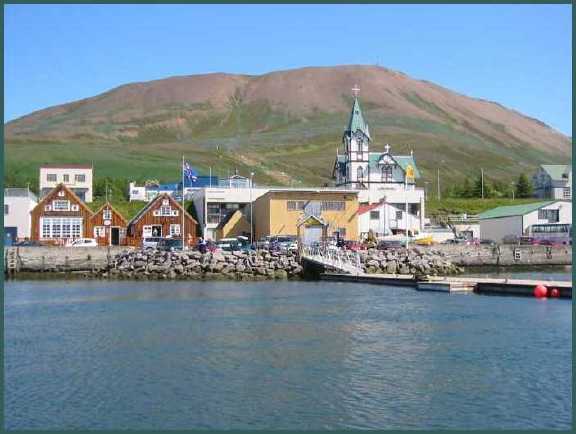
View of Husavik View of Husavik
 
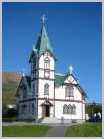
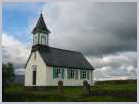
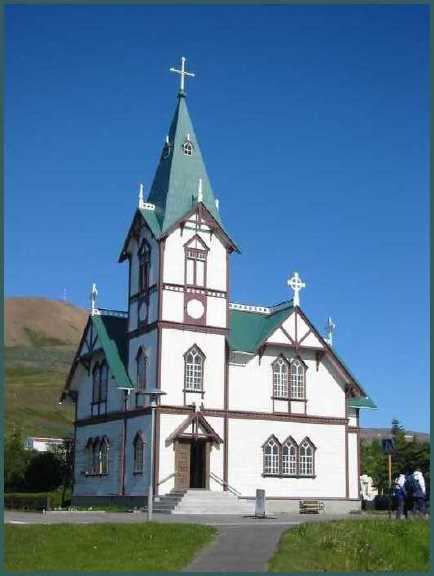
Husavik church Husavik church Evening at Myvatn
 
Gullfoss Egilsstadir ...and evening
near Egilsstadir
 
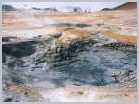
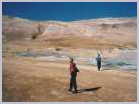
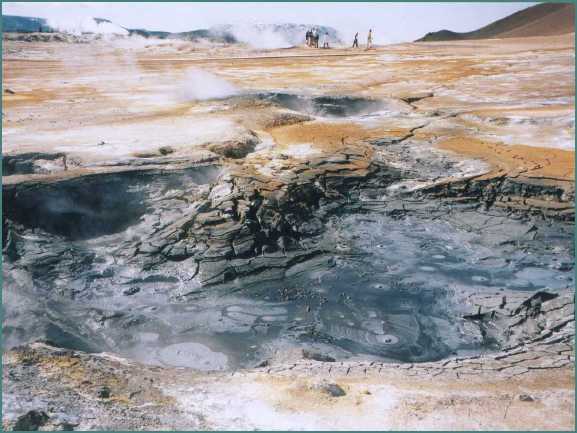
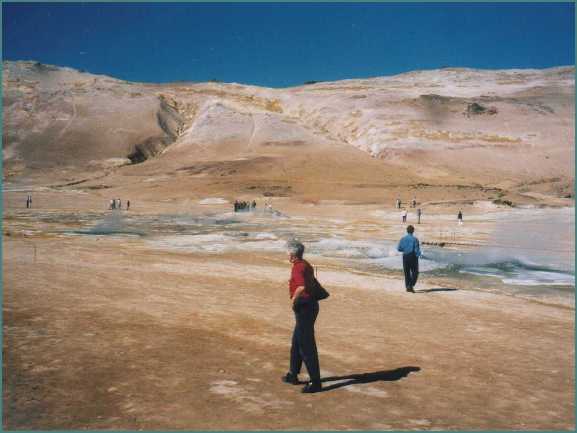
A relatively quiet mud pool The solfatara area
around Namafjall
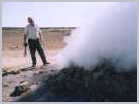
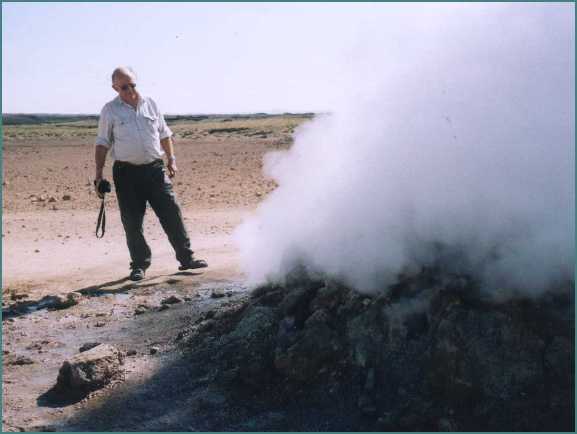
A steam vent
 
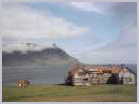
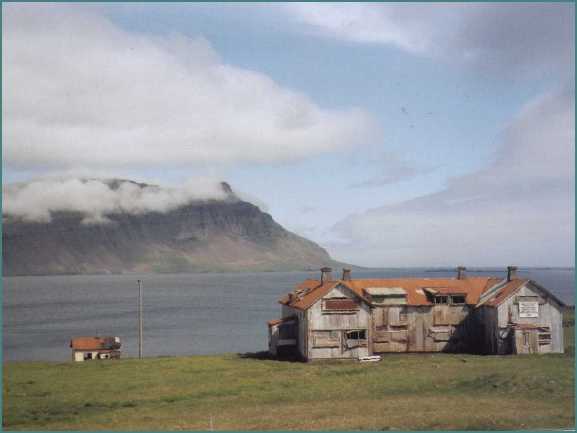
The old French hospital
on a S.E. fjord
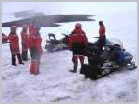
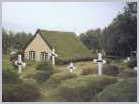
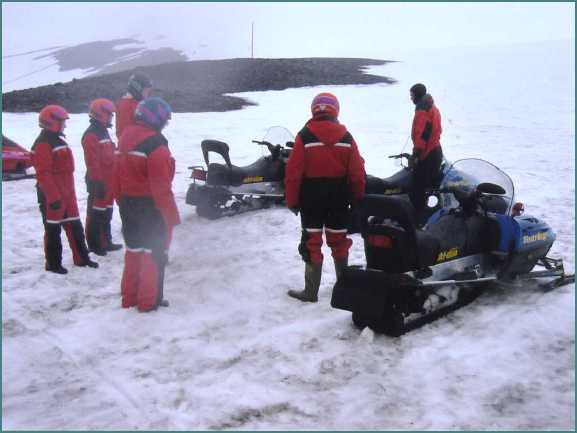
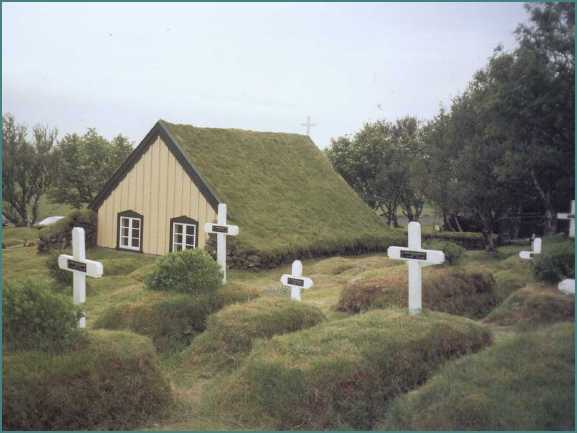
Take your skidoos A turf-roofed church
at Hof
 
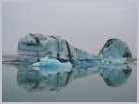
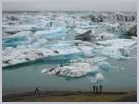
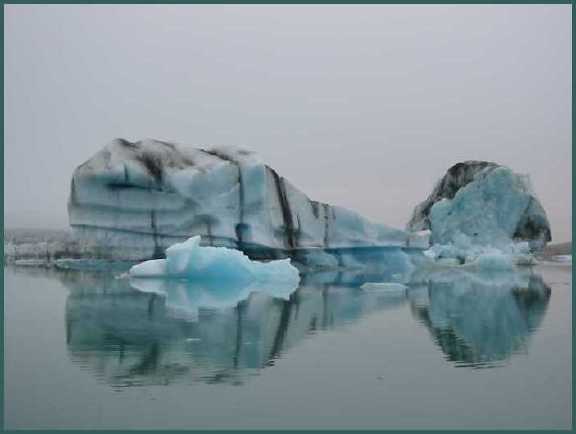
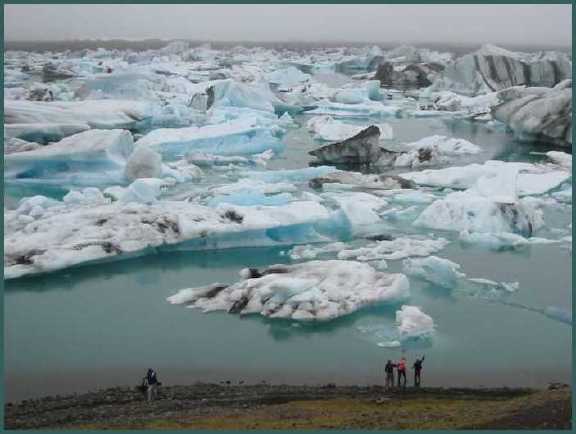
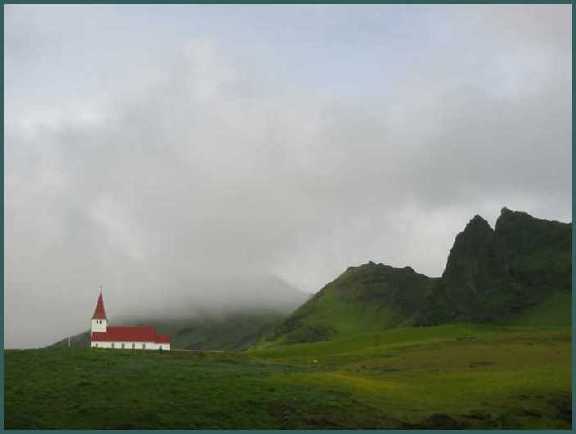
Icebergs at Jokulsarlon Icebergs at Jokulsarlon The church at Vik
 
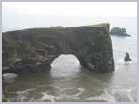
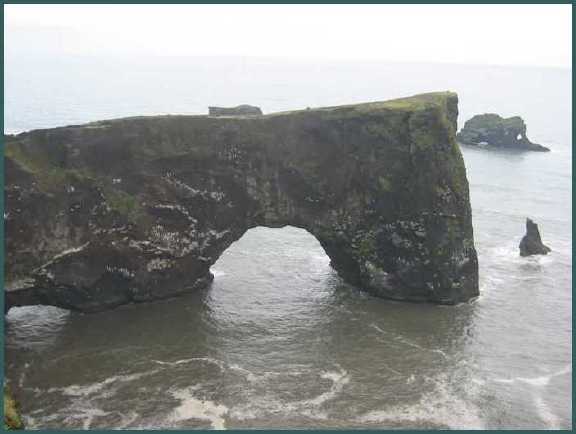
The headland and natural
arch of Dyrholaey
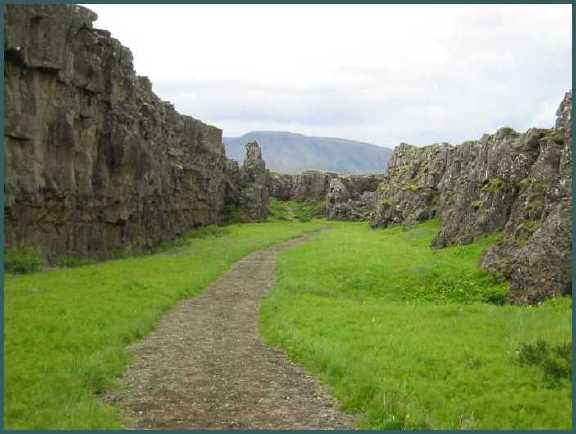
Thingvellir - the parting
of the continents
Thingvellir - the site
of the first Icelandic
Parliament
 
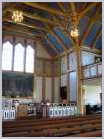
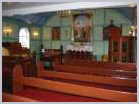
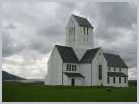
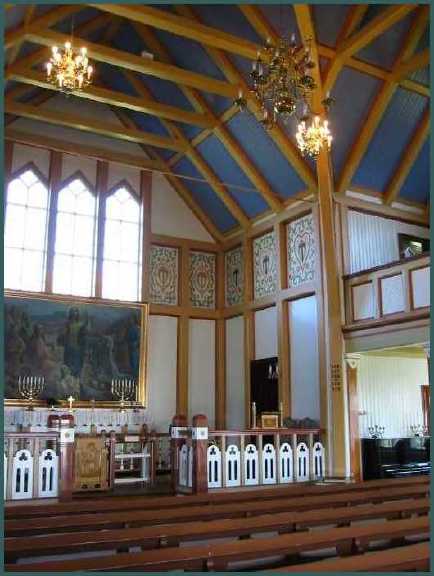
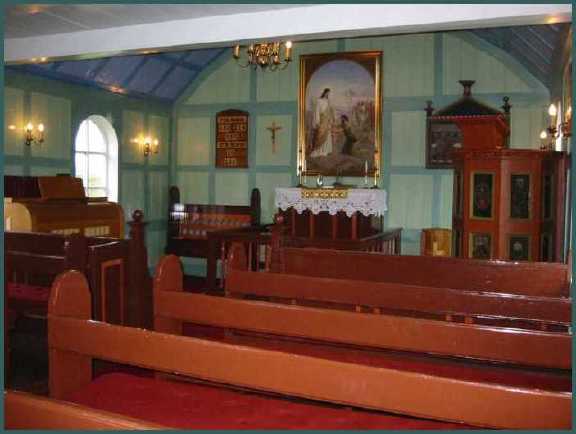
Thingvellir church Thingvellir church interior Skalholt Cathedral
 
The area around
the Geysers
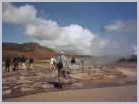
Thar she blows! The dome of super-heated
water just about
to burst
 
The Kerid crater Langahlid near Thingvellir Colourful houses in Reykjavik


Some notes on the trip

Friday 20th June
We took the 9.10pm Icelandair flight from Heathrow to Reykjavik. The plane was a Boeing 757 and full, our seats were towards the rear with windows, so we were off last on arrival. During the flight we were given a meal of cold ham. The sun set just as we left London but soon could be seen again above the horizon as we flew over Manchester and Northern Ireland. Then cloud obscured the view over the sea until we could see the coast of Iceland as we lost height. Being midsummer the sun goes below the horizon for only about two hours plus in southern Iceland and it does not get dark. We landed at 11pm GMT, passed through customs and then a minibus took us to our guesthouse near the centre of Reykjavik for the night. Almost an hour long ride through a rocky landscape, no trees, little grass, but patches of blue lupins in some places, a few low rise buildings scattered around until we reached the suburban area of the capital.

Saturday 21st June, Midsummer Day
After some 4/5 hours sleep in pleasant rooms we had breakfast from a selection of cereals, yogurt, cheese, ham, fish, bread and jam, tea and coffee for about twenty guests. Before our taxi took us the local airport we walked to the City Hall which is on a lake, saw hooper swans, mallard, eider, scaup, greylag geese. We walked around and happened upon a Yann Arthus-Bertrand photographic exhibition in the main square, "Earth from Above". Some hundred pictures were on display but we only managed to see some in the time available. A short taxi ride took us to the airport for the plane to Akureyri, a Fokker 50; a flight of less than one hour, cloudy some of the way but one could see the Langjokull glacier and the farmlands. We picked up our car, located the supermarket and stocked up with lunch items which we ate in the car park. We first found the Botanical Gardens, established 1912, where there are many plants and flowers from all over the world. There seemed to be a compression of the seasons as there were tulips in full bloom with summer flowers, Himalayan meconopsis (large blue flowers) aquilegias of many colours, poppies, dahlias etc. We drove on to our next overnight stop at Myvatn stopping on the way at the Godafoss horseshoe falls where Iceland's conversion to Christianity from the Norse Gods is commemorated. When we arrived there were very few people so we were able to take photos and admire the views but soon afterwards five coaches of French tourists turned up and there were large crowds. We then drove on to Myvatn over the rough road (even Road number 1 is not tarmac all the way). We saw the pseudocraters at Skutustadir on the south side of the lake where subsurface water trapped beneath hot lava explodes in steam eruptions, forming these round craters. Then on to Reykjahlid where we stayed in a cottage belonging to the Edda Hotel which held ten, double rooms with kitchen facilities, two shower rooms and a small sitting room. We bought pizzas at a nearby supermarket for our meal that evening, then walked round the scatttered settlement to look at the local cafe. Two Iceland horses were seen trotting along with their special gait. The midges were terrible so we dressed up and put on the deterrents. Spectacular scenery around the lake, Hverfjall volcanic crater and Vundbelgar mountain. Being northern Iceland the sun is below the horizon for about two hours only at mid-summer and it does not get dark, no more than our evening light. However, thick curtains do keep out most of the light.

Sunday 20th June
Breakfast was served at a nearby house which was furnished with beautiful wooden furniture and fittings, with wall hangings and cushions. We had a breakfast similar to the day before. Several other people were there. We kept our shoes on but realised we should leave them at the door! We were staying at Myvatn for two nights so that we could drive to Husavik and go on a whale watching trip. The road, which at times was rough, went over the higher lava sand desert of Holasandur where lupins were seen in profusion. As we went lower down we came to the hot spring area of Hveravellir where steam vents warm up greenhouses and the dwellings, even an indoor swimming pool. We rejoined the main road No. 85 at Laxamyri which is a very large farm with many horses and various other farms with sheep, cattle and horses. We went on through Husavik to the layby for Husavikurfjell but it was too far to walk up to this high viewpoint and get back in time for the boat trip se went up a short way looking at the wild flowers, lupins, violas, poppies etc., and also being almost mobbed by the arctic terns because we were near their nests on the rocky ground. There were other small birds similar to stonechats and skylarks around. We had our picnic lunch in the layby overlooking the bay of Skjallamdi and the snow capped mountains on the other side. Went back into Husavik for the four hour whale watching trip. It was a lovely sunny day although windy and chilly on the sea so we wrapped up well. The boat was fairly full but there was enough space to sit or stand as we wished. Alan went up in the large "crows nest", I sat in the prow to keep below the wind. It was quite a time before we reached the area where the whales and dolphins might be seen but there was a commentary in English given by a young woman who made it all interesting. The presence of seabirds indicates the position of krill in the water and therefore the likelihood of the whales. As we neared the cliffs on the other side of the bay we were lucky to see the tail fins of minke whales as they dived down. We were told that they surface to breath four times, the last time curving their backs sharply to go deep, so we stood there watching and counting, although one cannot see much of the creatureƫs body. We also saw a school of dolphins for quite a time as they stay near the surface and their bodies are more visible. They also come nearer to the boats. In total we saw some eight whales and about fourteen dolphins. On the way back we were given cinnamon buns and hot chocolate. Back in the town we had a look around and went inside the church built in 1907. Husavik is a centre of the whaling industry although at present Iceland does not catch any in agreement with the world wide regulations although this is likely to change soon. The whale watching trips and tourist industry help the economy to an extent although Iceland wants to start hunting again.

We drove back to Reykjahid and went the short way to Bjarnarflag where the geothermal power station runs on the superheated water springs. The small lagoon of warm water is an opaque blue so we paddled and then returned to have an evening meal at a nearby cafe. The sun sets about 11.30pm and a faint daylight stays all night so we returned to the blue lagoon with our swimming things and had a dip watching the sun go down behind the mountain, very pleasant. The water was warm but the air cold so we kept well down in the waist high water. The fine mud at the bottom is dark grey and said to be good for the skin, fortunately it washes off easily. As the day had been windy the midges were not so troublesome.

Monday 23rd June
On to Egilsstadir today so, after breakfast along the road, (we took off our shoes this time) we set off early, stopping at the geothermal pool to look at the rocks on the right hand side of the road. Here steam comes out of various fissures and "lava bread" is baked in underground ovens although we did not manage to see these. We went to have a look at the spot where the hot water comes out into the lagoon at 200C and cools gradually, the swimming area is roped off from this. Then, on over the pass to the eastern side of Krafla, the tufa buff coloured mountain, where sulphur seeps from the ground in places. This area is on the mid-Atlantic ridge and the gap in the ridge shows where the two halves are widening. The Namafjall mud pools have walkways around them, we could see into them, some are just bubbling mud, others spurting up blue grey matter and there are steam cairns as well. Then along Road No 1 to the old Hrosaborg crater where the 4WD road only starts to cross to the south. Shortly after we turned off on the road north to the Dettifoss waterfall, the highest in Iceland at 40 m. This road is mainly dirt and the dry ground meant that one kept well back from the few vehicles we met because of the dust cloud, then past the flat area where the Jokulsa river widens out before it reaches the waterfalls. We walked down to the canyon to get closer and looked at the various flowers and different volcanic rocks such as basalt columns, ropey lava etc. We had our sandwiches at the top looking at the scenery before returning along the road to rejoin Road No.1. Maintenance work on the road seems to consist of loading up sand from nearby and tipping it out over the potholes.

On over the mountains and sandy desert, where there was little vegetation except near rivers, the road being part dirt, part tarmac with a new road under construction in one section. We drove down a long valley with a short stop at a small waterfall for a coffee and then on to Egilsstadir. Our stop for the night was an old 1903 farmhouse hotel where we had en-suite rooms, the only ones during the trip. We went into the small spread out town to check on somewhere for a meal, then back for a drink by the lake in the evening sunlight. Went to Cafe Nielsen and enjoyed a good meal, a Viking meal of smoked lamb, various fish including dried shark and several breads.

Tuesday 24th June
Today we were heading for Hofn and decided to go round the eastern fiords rather than staying on Road No. 1 over the higher mountain pass. It was a sunny morning so we had good views of the mountains and the sea when we reached it again. The coast road took us round several fiords until we reached Stodvarfijordur where we visited the stone museum. Petra Sveinsdottir has collected many rocks and minerals in the locality over the years and has arranged them in her garden with some in the house which are labelled. We stopped for our sandwiches just up the road but it was now cloudy and cool. We picked up rocks at the side of the road and then went on round the head of the fjiord with good views from across the water at this small fishing village. Round one more fiord and then we rejoined Road No. 1 at Breiddalsvik. We drove on and stopped at a beach for some more rocks. It started to rain so views across the flatter ground, rivers and lagoons were gone and by the time we reached Hofn it was very wet. Our place for the night was at Arnanes, just beyond the town and was like a Swiss chalet, lovely rooms and a small restaurant including the owner's art gallery. The meal was once again very good.

Wednesday 25th June
Today was the day for the skidoos and the icebergs so we were up early for breakfast and soon on our way. It was raining with low cloud so still no views. Arrived at the departure point for the jeeps to take us up to the Vatnajokull glacier which takes about 3/4 hour. There were good views of the glacier's old valley as it has receded so much over the last seventy years; at one time it had reached the sea. At the top we dressed in one piece suits and helmets at the cafe and got on to the two man skidoos with instructions on driving them and to keep our feet on the rests etc. Set off follow my leader style up the snowy plateau, again we were in low cloud so no views of the mountain tops around us. To turn the vehicle we had to lean over to the way we wished to go, Alan and I managed to lean too far and fell sidewards, no damage except to pride perhaps. It was also necessary to keep up a reasonable speed. The way was over slopes and hollows so once or twice we lost sight of the one in front, just hoped they had not gone another way! The ride out and back was for about half an hour, interesting but a pity about the weather. Back to the jeeps and the ride down the narrow twisting track alongside the glacier tongue and the high fells before dropping to sea level again.

Next stop Jokulsarlon with a break for our sandwiches on the short journey. Here the Breidamerkurjokull glacier almost reaches the sea and as pieces break off they pass into the lagoon where the icebergs gradually melt in the brackish water. An amphibious vehicle takes groups along the track and then into the water to go round the icebergs keeping well away from them as 90% of the ice is below the water. They can also turn over when the weight of exposed ice is more than that of the ice below. The colours are amazing, blues of various depths with streaks of grey and black dust from volcanic eruptions. We were shown a lump of ice picked up by the accompanying rescue boat which fell as snow about 1600 years ago and also ate a small piece of the transparent stuff. Back to the starting point and up on the higher ground to take yet more photos. before we walked under the road bridge to the mouth of the lagoon. The sea was rough and the remnants of icebergs were on the beach and the edge of the sea gradually breaking up completely. The ground here is very rocky and the arctic terns regard it all as good nesting sites. However they do not like people so if anyone is too near they'll be mobbed. A cyclist along the road had a large number following him.

Crossing the desert of Breidamerkursandur we went on to Hof, our destination for the night where we stayed in an annexe to what had been the farmhouse. After the evening meal which included cod we walked around the settlement where there were various turf buildings including the church which dated from 1884. Choir practice was in progress so we sat and listened for a while before looking at the graves, which were mounds of turf, perhaps the ground is too hard to go downwards. Also noticed the headstones give the name and dates only so one did not know the relationship patterns because of the use of 'son of' or 'daughter of' rather than surnames. The evening was very windy with squally rain at times.

Thursday 26th June
Breakfast was in the farmhouse where there was a group of some forty French tourists also staying overnight and then off for the drive to Laugarvatn, about 200 miles. Various glacier snouts could be seen from the road across the sand desert of Skeidarsandur. In these sand desert areas one cannot drive if the wind whips up the sandstorms and traffic lights show when it is not safe. The flat plains are covered in glacier debris with little vegetation and subject to flooding from the glaciers. In 1996 various bridges were swept away when volcanic activity released the ice and water beneath them. The coastal plains near the feet of the mountains have been cultivated, modern buildings replacing the now derelict turf houses. We stopped and looked at the lava flow at Eldhraun (fire lava) where it is covered in bright green moss, a contrast of red/brown pumice and green. We also stopped at the gravel ridge of Laufskalavarda, where small cairns have been built up to bring good luck to those who pass by for the first time. We piled up a few stones ourselves.

Across Myrdalssandur to Vik, a town of some 300 people, a school, a swimming pool, a clinic and a county magistrate plus the factory shop to spend some money on t-shirts and other small items. In this section of the journey the mountains are closer to the sea, and include the headland of Dyrholaey, a nature reserve and nesting site for sea birds on the 600 feet high cliffs. It is some miles on from Vik and we decided to have our lunch there, the track winding up to the top looked somewhat daunting but seeing a minibus and motorhome going up we went as well, selecting a suitable low gear on the rough road. It was well worth it because the views along the coast in each direction were great and the headland itself includes an archway at sea level large enough for a very small plane to pass. The sound of seabirds, the sight of their nesting perches on the vertical cliffs, fulmars, puffins, guillemots and others were a good background for our walk to the lighthouse and sandwiches on the cliff top. On to Skogar and walked to the 60m. high waterfall where the spray is tremendous; one can get very close to its foot and also climb up the cliff to where the river flows over.

Finally on to Laugarvatn where we were to stay for two nights in Hotel Edda, a tertiary college with accommodation in the college bedrooms. As there was a conference of some 120 women attending a Nordic Craft meeting we went down the road to the main Edda Hotel for our evening meal. A good one with views from the restaurant window over the lake and to the mountains, including Hekla, a dormant volcano, snowtopped in the distance.

Friday 27th June
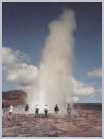
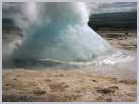
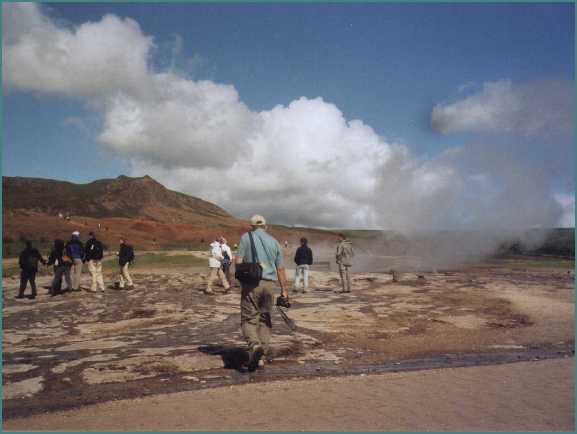
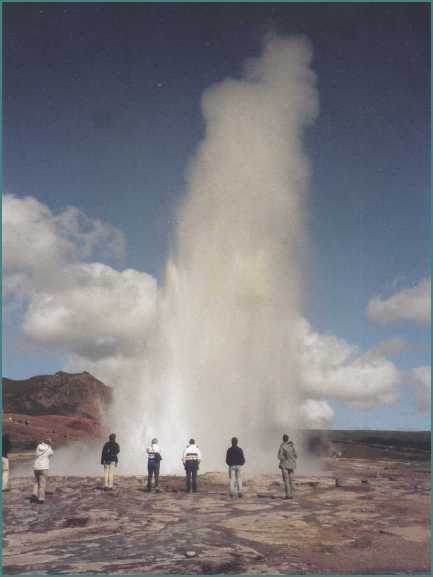
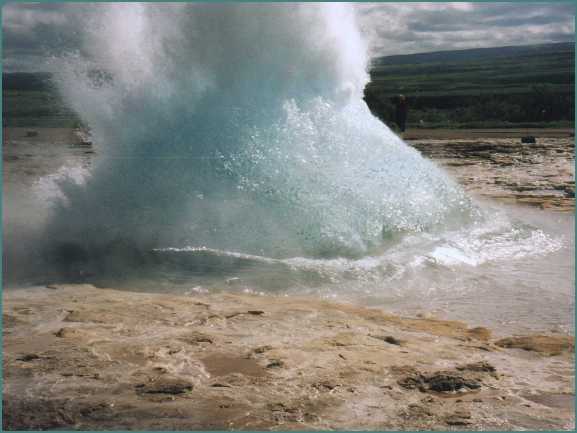
Today we took in the sights of the "Golden Circle". After the usual breakfast in the crowded dining room we set off for Geysir which was not that far. It is the area of hot springs, fumaroles, mud pots and geysers, the last being named from this place, which is again on the mid-Atlantic ridge. Being quite early in the day the coach parties had not yet arrived so we walked over the site paths and were able to get near to the interesting places and take photos. The original Geysir is now dormant but Strokkur is really spectacular. It erupts about every 8/10 minutes, surface water which has gone down to about sixty feet is heated into steam and then comes up the vent through the pool of water collected on the surface. The area is roped off but one can get very near. Small amounts of steam escape through the water which bubbles up and down, then this becomes a dome through which the main body of steam escapes rising rapidly very high in the air once or sometimes two or three times. The hot water runs away downhill. One needs to keep the camera to the eye as the escapes are very brief, the comments of the waiting spectators were amusing. There are also other vents in the ground with sulphur stains and the smell of bad eggs and mud pots of various sizes. We walked around the visitor centre shop but found things like books rather expensive, postcards varied between 50 and 70 Kr (48p/67p) in different places.

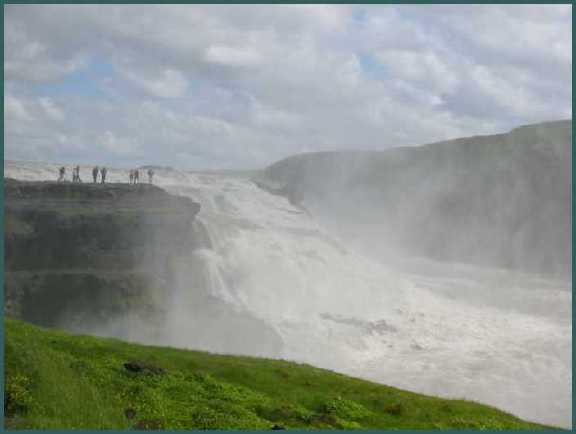
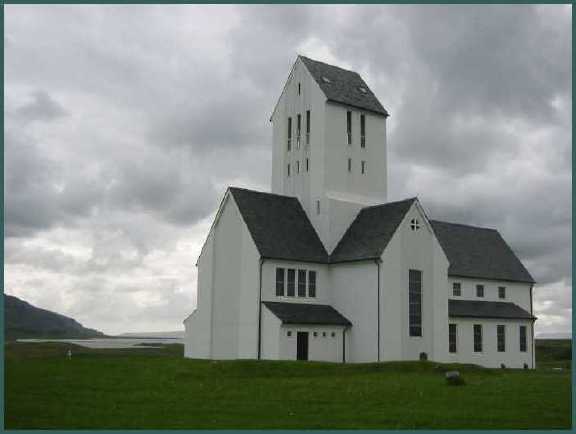
Then on to Gulfoss waterfall, a double horseshoe cascade which drops into a deep canyon. There were good viewing points and we were able to get very close to the top of the fall - and get damp in the process. There were lots of wild flowers on the side of the path down because of the spray. The day was sunny, clear and windy so we had good views of the distant mountains and glaciers. The visitors' centre had good pictures and explanations of the area and we ate our lunch just outside. Then on to Skalholt which has been a centre of religion for a thousand years having a bishop until about 1800. On the way we took a look at Faxi where the river Tungufjlot and the small falls have been repaired to provide a fish ladder. The rivers in this area have been modified to prevent the flooding which occurred. At Skalholt we went in the cathedral which dates from 1963, although a very isolated place there is an educational centre attached.

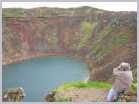
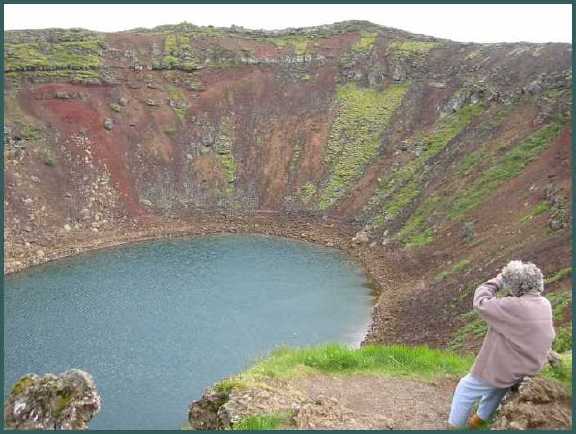
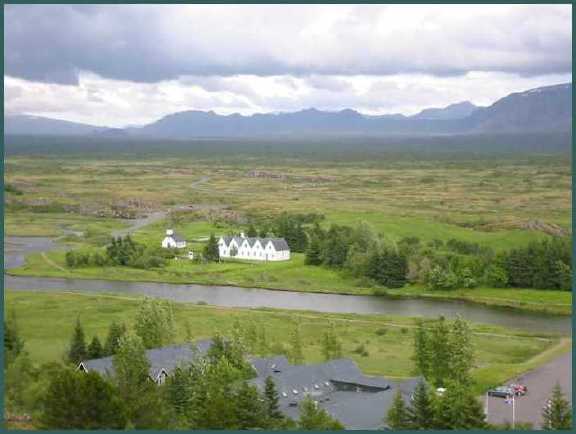
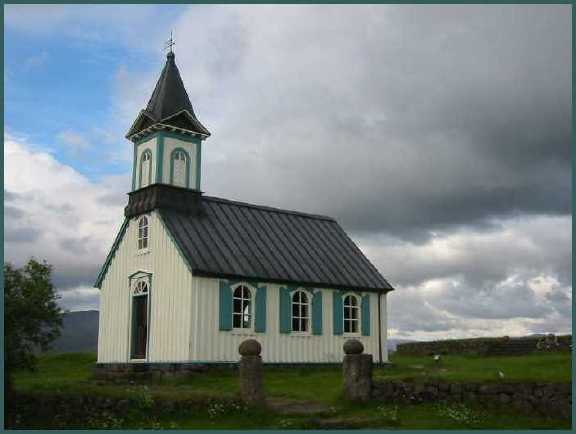
Back to Road No. 35 and on the way we stopped at Kerid, a 6000 year old volcanic crater, just as one imagines it should be, steep conical sides, and water at the bottom. The final place of interest in the circular tour was Thingvellir, the site of the Althing, the old Parliament of Iceland and also the largest lake in the country. This area is also on the mid-Atlantic ridge and the various fissures in the landscape show where the earth is rising and splitting, one side going west and the other going east. We stopped at one point and walked down into the Almannagja ravine where this is very obvious, the east side is lower than the west as the earth is sinking, the actual widening being at the rate of 1cm per year. Then back to the road as we realised it was not the best place to view the area and soon at the visitor centre we could look out from the viewing platform over the old church, the old farm buildings and the site of the Althing below. We drove back the way we had come and went there visiting the little church and looking at the archaelogical excavations of the old booths used during the annual meeting of the Althing which began in about 930AD. Here the River Oxara nearly reaches the Thingvellir lake which flows out at the other end through the River Sog to reach the coast after Selfoss. We returned to Laugurvatn over the dry sand desert which divides Thingvellirvatn from Laugurvatn stopping to look at the view towards Hekla and the other mountains and then had our evening meal at the Edda Hotel down the road.

Saturday 28th June
After breakfast at the hotel we had a quick look around the exhibition of arts and crafts as it seems that the conference was for women from the Nordic countries involved in such activities, ceramics, woodcraft, painting, needlecraft. The day was cloudy and soon it was raining so, when we reached Hveragerdi, we had a quick look at the church and then walked round the 'Eden' garden centre with its hothouse plants such as bananas and pawpaw. The town is again on a geothermal site and the various greenhouses are heated naturally. We bought postcards and souvenirs and Thompson and Morgan seeds imported from UK! On to Reyjkavik and up to the Perlan Centre, where we ate our lunch by the car and then went in to have a drink up in the coffee bar which gave us views through the rain of the city. The revolving restaurant on the top floor was not open but the artificial geyser which spouts up through the four floors was working. It is an impressive building with an exhibition and concert area, with statues and a 'History of Iceland' film show. It was still raining so we drove to the Kringlan shopping centre, an indoor arcade on three floors with lots of small shops. On to the Isafod guesthouse once more were we sorted ourselves out. We went round the various restaurants and had a good meal in Cafe Victor. Back to base and a last bottle of wine.

Sunday 29th June
Our last morning before catching the plane back home at 4pm. After breakfast we packed the car and then walked round the old town. Spent some time looking at the exhibition 'The Earth from Above' again, some hundred aerial photos. in the main square. Then, up the hill through the side streets, to the new cathedral of Hallgrimsskirkja which was eventually completed in the 1990s. It is a striking landmark with a towering west tower somewhat like a Viking boat and inside is light and airy, tall columns rising to the roof. The bells strike each quarter hour and if one goes up the tower one is beneath them, we just listened down below at 11am. Outside stands the statue of Leifur Eriksson who discovered 'Vinland', a present from USA in 1974 for the 1100 anniversary of the founding of Iceland. We walked back down through the old streets and then drove to the Blue Lagoon to have a look, having found the warm pool at the beginning of the holiday we did not want to go in the water here. Again, formed from the cooling water of the power station , it has the same opaque blue water and grey mud which is said to be good for the body, and is a large complex of carparks, restaurant, shop, and pool area which was very busy. We walked down the path which passes through the high lava flow on each side. It was still raining so we had a quick look round and then back to the car for the short drive to the airport plus a diversion to fill up with petrol. The airport was busy as some 300 American golfers were returning home complete with large golf bags so checking in took some time but we had enough time to eat our last sandwiches and spend our last few Kroner before boarding the aircraft for Heathrow and home.

M.H.G.


Return to the 'Parkside' page
Free counter and web stats

Valid HTML 4.01 Transitional